Portuguese pianist Maria João Pires receives Helena Vaz da Silva European Award for Raising Awareness on Cultural Heritage 2025 in Lisbon
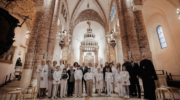
Maria João Pires, one of Europe’s most influential pianists, a visionary educator and a cultural thinker from Portugal, received the Helena Vaz da Silva European Award for Raising Public Awareness on Cultural Heritage 2025 at a ceremony held on 1 November at the Gulbenkian Foundation in Lisbon. On this occasion, the winners of the European Heritage Awards / Europa Nostra Awards 2025 from Portugal were also celebrated.

High-level representatives of the partners and supporters of the Helena Vaz da Silva European Award – namely Centro Nacional de Cultura, Europa Nostra and the Portuguese Press Club, the Ministry of Culture of Portugal, the Gulbenkian Foundation and Tourism of Portugal – participated in the ceremony, which was attended by some 300 people, both in person and online.

Sneška Quaedvlieg-Mihailović, Secretary General of Europa Nostra, who acted as master of ceremonies, stated: “Heritage matters for Europe. Heritage is a collective responsibility and a strategic resource for building a cohesive, democratic and sustainable Europe that looks after the wellbeing of its citizens. As a journalist, a cultural leader and as a Member of the European Parliament, Helena Vaz da Silva made a notable contribution to the promotion of a Europe based on our shared heritage and values. In today’s extremely challenging times, Europe and the world need forceful champions of these values, who honour and pursue the legacy of Helena.”
The Helena Vaz da Silva European Award 2025 pays tribute to Maria João Pires’ exceptional aptitude for communicating European culture and values through music. “Maria João Pires is one of Europe’s most poetic and influential pianists. Her work transcends performance: she is a visionary educator, a cultural thinker, and a quiet revolutionary in the field of musical heritage,” noted the Jury of the Award.

In an eloquent laudatory speech, Paul Dujardin, Council Member of Europa Nostra and President of Europa Nostra Belgium, stated: “Maria João Pires has shown us that the piano can be more than a stage. It can be a sanctuary, a school of humility, a language of peace. Maria João Pires created spaces where music is not a luxury – but a right. (…) In the hills of Portugal, she founded Belgais, a sanctuary where music meets ecology; where silence is as important as sound; where children from rural areas learn not only how to play, but how to listen – to themselves, to nature, to each other. That same spirit travelled north – to Belgium, to Partitura. Through Partitura Choirs and Workshops, she invited children of migration, of poverty, of silence, to find voice in music”.

In a moving acceptance speech, Maria João Pires stated: “Competition often leads us to forget what is essential: the community, the group, our deepest human nature. It makes us forget that human rights are for everyone – and should never be a cause for doubt or hesitation. (…) I accept this Award with the hope that art will continue to bring us closer together, remind us of our fragility and our strength, and teach us that to create is also to care.”

In her address, Margarida Balseiro Lopes, Minister of Culture, Youth and Sports, congratulated the winner of the Helena Vaz da Silva European Award 2025 as well as the Portuguese winners of the European Heritage Awards / Europa Nostra Awards 2025 on their remarkable achievements.

In his address, Guilherme d’Oliveira Martins, Trustee of the Gulbenkian Foundation, also in his capacity as Member of the Jury, thanked all the winners of the Helena Vaz da Silva Award for making cultural heritage a living reality. He spotlighted the 20 years of the Faro Convention – a landmark document that has transformed how Europe understands, values and engages with heritage. For two decades, the Council of Europe Framework Convention on the Value of Cultural Heritage for Society – the Faro Convention – has recognised heritage as a living, dynamic force that connects individuals, strengthens communities, and shapes our present and shared future.

In her address, Maria Calado, President of the Centro Nacional de Cultura and President of the Jury of the Award, paid homage to Helena Vaz da Silva (1939-2002), for her work promoting “culture as a driver of development, freedom, citizenship and happiness”. She also mentioned the 80th anniversary of Centro Nacional de Cultura – eight decades of action in favour of culture, heritage, democracy, education and active citizenship. Centro Nacional de Cultura acts as coordinator of the Europa Nostra Heritage Hub in Lisbon and is among the partners of the European Heritage Hub project, led by Europa Nostra and co-funded by the European Union.
The ceremony concluded with the broadcasting of a congratulatory video message from the President of the Republic of Portugal, H. E. Marcelo Rebelo de Sousa.
Tribute to the winners of the European Heritage Awards / Europa Nostra Awards 2025 from Portugal
During the ceremony in Lisbon, the winners of the European Heritage Awards / Europa Nostra Awards 2025 from Portugal were also celebrated.

João Barros Matos, Architect and Project Leader, presented the National Museum of Resistance and Freedom – Peniche Fortress, winner in the Category Conservation & Adaptive Reuse. The Peniche Fortress, one of the main political prisons during the dictatorship in Portugal, has hosted the National Museum of Resistance and Freedom since 2024. Through careful adaptation and civic engagement, the site has fully engaged visitors with the values of liberty and democracy.

Américo Rodrigues, Directorate-General for the Arts, introduced the “Saber Fazer” Programme, winner in the Category Education, Training & Skills. “Saber Fazer” is Portugal’s national strategy for the safeguarding of traditional crafts and skills. It promotes knowledge transfer, sustainability and territorial cohesion by bridging urban-rural divides – turning ancestral techniques into tools for cultural and economic resilience.

Last but not least, Maria Carlos Pêgo, Director of the Department of Culture and Tourism of the Municipality of Coimbra, outlined the project Almalaguês – Weaving the Future from the Tapestry of Time, Coimbra, winner in the Category Citizens’ Engagement & Awareness-raising. This project has revitalised the traditional weaving of the village of Almalaguês, engaging local communities and younger generations through workshops, research and cultural events. It has promoted intergenerational dialogue, ensuring the continuity of ancestral know-how.