A global movement linking cultural heritage and climate resilience gathers momentum at COP31 in Antalya, Türkiye
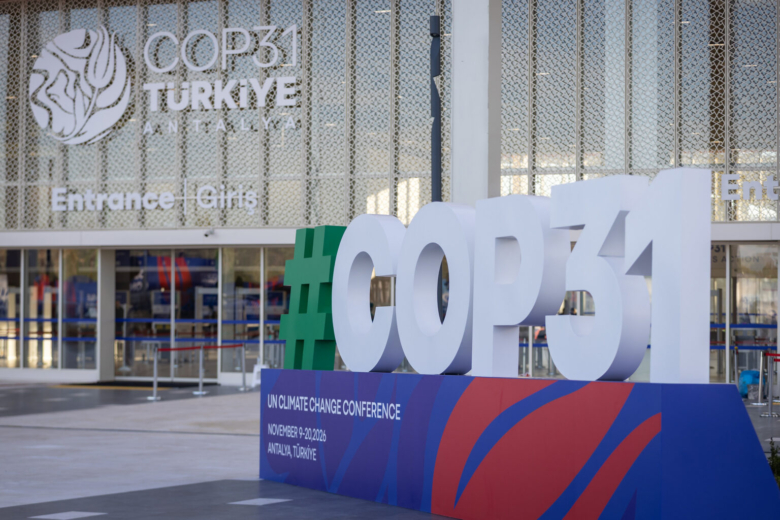
As COP31 drew to a close in Antalya, Türkiye, on 22 November 2026 with a record-breaking 50-hour extension, governments ultimately concluded the summit without reaching an overarching agreement on key issues, despite increasing pressure on vulnerable communities and the prospect of further extreme climate events. Yet, alongside the negotiations, another important story unfolded: the growing recognition of culture and cultural heritage as essential resources for climate action, adaptation and resilience. Through two weeks of international dialogue, partnerships, and practical initiatives, Europa Nostra, the European Heritage Hub and its partners demonstrated how cultural heritage can contribute to a more resilient and sustainable future.
© UN Climate Change – Kiara Worth
Europa Nostra and the Hub were represented by Andrew Potts, Heritage and Climate Action Advisor at Europa Nostra, and Director of Policy and Partnerships at Preserving Legacies, Dr Cristina Garzillo Leemhuis, Head of Socio-Cultural Transformations at the ICLEI European Secretariat, Dr Ege Yıldırım, Vice-President of Europa Nostra Türkiye and Culture at COP31 Coordinator, and HRH Princess Dana Firas, in her capacity as Honorary Chair of the Climate Heritage Network.
Reacting to COP31, Andrew Potts wrote in a statement to members of the Heritage Adapts! coalition: “In a conference marked by division, we demonstrated unity … Throughout COP31, we saw what that commitment looks like in practice: partnerships forged, solutions shared, new collaborations launched. We presented to COP31 a growing global movement determined to protect culture and heritage from climate risks and to realise the ambitions of the Global Goal on Adaptation cultural heritage target (9g).”
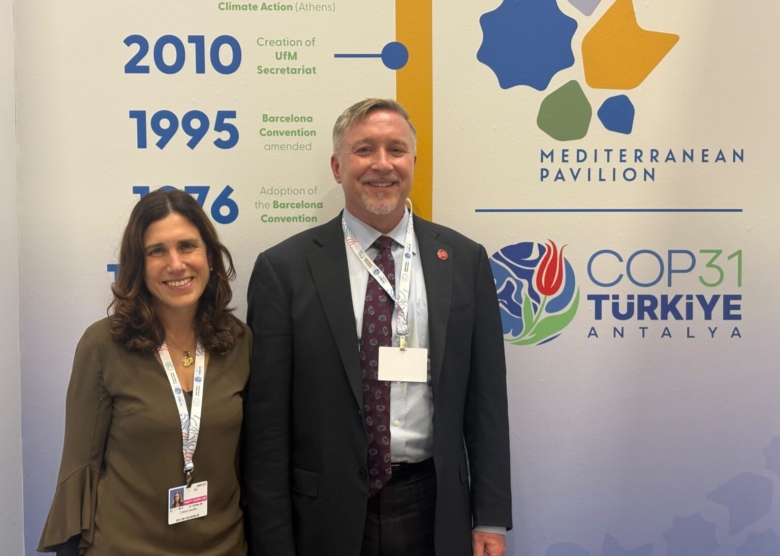
Photo credit: European Heritage Hub
Sneška Quaedvlieg-Mihailović, Project Leader of the European Heritage Hub and Secretary General of Europa Nostra, said: “At COP31, many participants reaffirmed that cultural heritage is a vital resource for building climate-resilient communities and shaping a more sustainable future. While the outcomes of the formal negotiations have not matched our ambitions and expectations, the energy, commitment and growing collaboration of the global heritage community in Antalya were truly inspiring. Through Heritage Adapts!, Culture at COP and the many partnerships forged and strengthened here, a growing civic movement is demonstrating that heritage-based solutions are relevant to global climate goals. We can take away from Antalya a renewed sense of determination to turn recognition into action, and to ensure that cultural heritage is fully embraced as part of the climate solution.”
Bringing culture and heritage into the climate conversation
COP31 provided an important platform for advancing culture-based climate action, with a particular focus on cultural heritage. A central part of this effort was Culture at COP31, coordinated by Dr Ege Yıldırım, a civil-society platform connecting the participation of the global culture, arts and heritage sectors in the Antalya summit. Convened by the Europe Region Chair of the Climate Heritage Network (Europa Nostra / European Heritage Hub) and co-hosted by Europa Nostra Türkiye and ICOMOS Türkiye, the platform brought together cultural organisations, international networks, governments and civil society.
Since COP25 in 2019, Culture at COP has connected more than 250 organisations across six continents, working to ensure that cultural voices are visible and influential in UN climate processes. Its work encompasses adaptation, mitigation, decarbonisation, loss and damage, and just transition policies. COP31 represented an important opportunity towards coordinated international implementation.
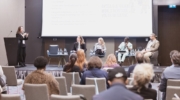
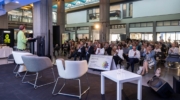
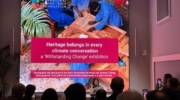
On 19 November, the COP31 side event “Culture is Climate Action: ‘İmece’ for Implementation” was held on the second-to-last official day of COP31, marking the culmination of the highly successful Culture at COP31 programme. Organized by the Culture at COP31 platform with the support of the Vehbi Koç Foundation, Koç University’s Suna & İnan Kıraç Research Center for Mediterranean Civilizations (AKMED), the event celebrated the diverse actors of Culture at COP31. This included uniting all five culture- and heritage-related Plans to Accelerate Solutions (PAS) under the culture and heritage objective (AG19) of the Global Climate Action Agenda: Heritage Adapts!, Heritage-Informed Building Decarbonization (Heritage Now!) Integration of Culture and Cultural Heritage into National Adaptation Plans, Storming the Apocalypse, and Creatives for Climate.
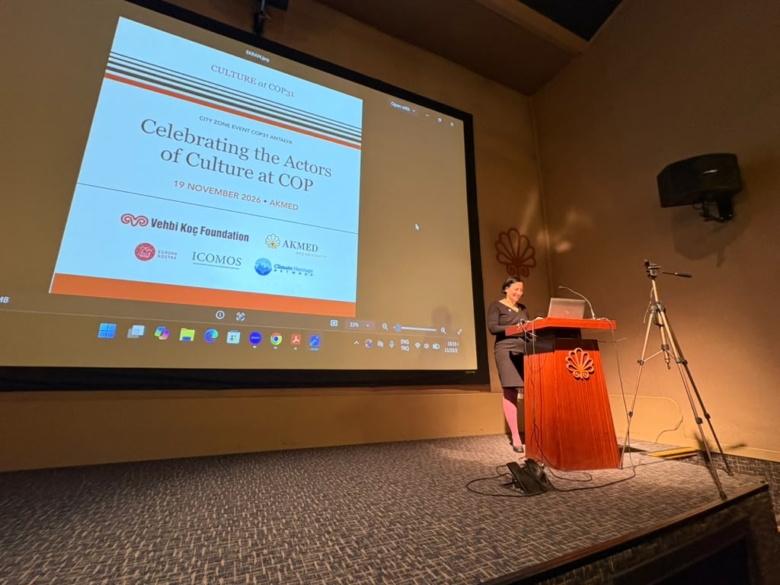
Photo credit: European Heritage Hub
Dr Ege Yıldırım, Andrew Potts and Dr Cristina Garzillo, gave opening remarks, while HRH Princess Dana Firas gave a keynote address. Andrew Potts presented the Heritage Adapts! Plan of Action and Strategy, which aims to strengthen capacities for adapting cultural practices and heritage sites to climate change. The programme also featured presentations on heritage-informed building decarbonisation, climate adaptation, disaster risk reduction, creative storytelling and climate diplomacy, as well as contributions from international, Turkish and Antalya-based cultural actors. Notable among the projects showcased was the European Heritage Award laureate “Assessing Earthquake Damage to Cultural Heritage Sites: A citizen-science and remote-sensing response to the 6 February 2023 Türkiye earthquakes” by Dr Nusret Demir and Dr Çiler Çilingiroğlu.
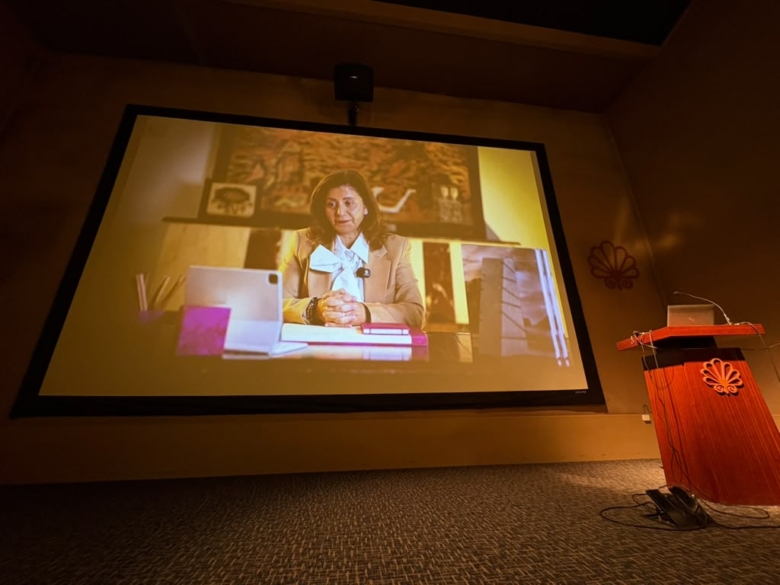
Photo credit: European Heritage Hub
Heritage Adapts! showcases solutions from around the world
A major highlight of COP31 was the extensive presence of Heritage Adapts!, Heritage Adapts! is a global campaign uniting stewards of heritage sites and cultural practices behind a collective pledge to take climate adaptation action by 2030, and supporting them through the process to actually do it. It is recognised as a Plan to Accelerate Solutions under the UNFCCC Global Climate Action Agenda aligned with the cultural heritage target of the Global Goal on Adaptation. Europa Nostra/EHH are founding leadership partners of Heritage Adapts! and sit on its steering group.
During the first week, the campaign featured in the session “Preserving Culture & Heritage: An Inter-Generational Dialogue between Leaders and Youth” on 11 November. On 12 November, which was “Resilient Cities and Built Environment,” saw a host of events including “Using Cultural Heritage to Drive Engagement on Climate Action” organized by Ireland’s Department of Housing, Local Government and Heritage in the EU Irish Presidency Pavilion which showcased an innovative, participatory climate change risk assessment undertaken at the Rock of Cashel national monument.
The day brought further opportunities to showcase practical solutions. The Italian Pavilion hosted the side event “Climate Change and Culture: Two Perspectives on a Global Challenge,” featuring both Andrew Potts and Dr Cristina Garzillo Leemhuis, highlighting the importance of connecting research, policy and practical implementation. The discussion centred on built heritage as a driver for climate action. Other valuable events were held in the Estonia Pavilion and the Mediterranean Pavilion.
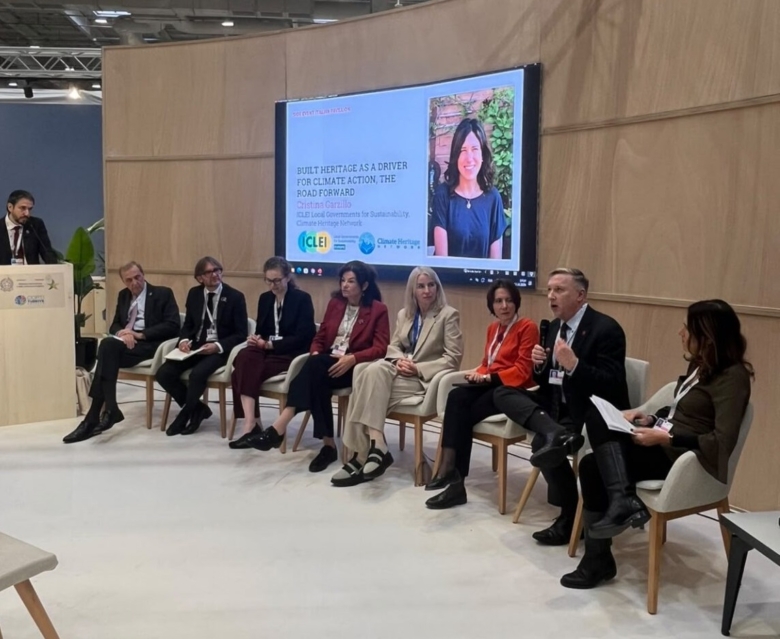
Photo credit: European Heritage Hub
These were followed by the “Antalya City Showcase: Exploring Climate Futures in the Mediterranean and Beyond” on 13 November. The latter, which was organised by the National Geographic Society, included screenings of Heritage Adapts! A Letter from Heritage and A Letter from Rami Library – Türkiye. Also on 13 November, the session “The Overlooked Solution: Culture and Heritage in Climate Action”, organised by IFLA, UCLG and the LGMA Working Group on Culture, explored the contribution of culture to climate solutions, especially in the context of cities and regions. Additionally, on 13 November, the full-day programme organised by ICOMOS on Climate Change and Archaeological Sites at the ancient cities of Side and Lyrbe included a panel featuring interventions by Andrew Potts presenting Heritage Adapts! and one of its new Turkish stewards, the ancient city of Olympos.
Across the programme, heritage stewards shared experiences from archaeological sites, historic cities, libraries, museums, cultural landscapes and living heritage practices. These diverse experiences demonstrated how combining climate science, traditional knowledge and community engagement can help places and practices adapt to environmental change.
On 16 November, the session “Heritage Adapts! 3000 x 2030: Join the International Community Taking Climate Adaptation Action” took place with presentations by Andrew Potts, Claire McGuire of IFLA, a HA! leadership partner, and Dr Ege Yildirim at the COP Art Hub in the Green Zone, alongside the “Intergenerational Dialogue: Building a Sustainable Future through Cultural Heritage and the Arts” event, organised by Koç University in the COP31 Art Hub. The involvement of the Vehbi Koç Foundation was particularly noteworthy, as the prestigious Koç University Libraries announced their support for the campaign, further strengthening momentum for climate adaptation across Türkiye’s cultural sector. Istanbul’s Rami Library unveiled that it is joining Heritage Adapts!, becoming one of Türkiye’s first Heritage Adapts stewards, while Taner Beyoğlu, Director-General of Türkiye’s Directorate General of Libraries and Publications also confirmed its support for the campaign.
Also on 16 November, Andrew Potts moderated “From Policy to Implementation: Cultural Heritage-Based Solutions in Climate Action,” organised by ICOMOS, IFLA and the National Geographic Society. Featuring HRH Princess Dana Firas and heritage stewards, the event showcased three culture and heritage Plans to Accelerate Solutions, including Heritage Adapts!, highlighting the importance of translating international commitments into practical action on the ground.
Strengthening international cooperation and policy commitments
On 17 November, Andrew Potts represented Europa Nostra at the “Fourth High-Level Ministerial Dialogue of the Group of Friends on Culture-Based Climate Action,” which brings together national governments interested in advancing the recognition of culture and cultural heritage within the global climate agenda. A highlight of the event was the election of Spain, represented by its Ministry of Culture, as a Vice Chair of the Group, leading alongside the UAE, Brazil, Indonesia and South Africa.
Potts’s prepared statement reaffirmed Europa Nostra’s strong support for integrating culture and cultural heritage into climate policies and international cooperation. Highlighting the conclusions of the European Cultural Heritage Summit 2026 in Nicosia, held under the theme “Mare Nostrum: Sustainability through Heritage”, he emphasised the vital role of shared cultural heritage in strengthening regional resilience, reducing emissions and promoting climate justice.
He also underlined the growing threats to cultural heritage posed by global warming and highlighted Europa Nostra and the European Heritage Hub’s engagement as a Leadership Partner of Heritage Adapts!.
Referring to ongoing adaptation initiatives across Europe, he highlighted the Hub’s Intergenerational Climate Conversation at the Archaeological Park of Ostia Antica, and called for stronger recognition of cultural heritage within global climate frameworks and invited the Group of Friends to support efforts to strengthen the Global Goal on Adaptation at future COPs.
A flagship moment for Heritage Adapts! came on 18 November, which was Human and Social Development Day at the COP, with the “Our Heritage, Our Future: Culture-Powered Adaptation for Resilient Communities, a Global Climate Action Agenda” event organised by Heritage Adapts! The session featured a keynote address by H.E. Margareth Menezes, Minister of Culture of Brazil, and contributions from HRH Princess Dana Firas, Deyvesson Israel Alves Gusmão of Brazil’s National Historic and Artistic Heritage Institute (IPHAN), and representatives of Turkish cultural practices and heritage sites, as well as Heritage Adapts! Leadership partners the World Monuments Fund and CIPRED.
Another important event also occurring on 18 November was the High-Level Dialogue on Culture and Heritage as a Zero Waste Strategy, which demonstrated that traditions of repair, reuse, stewardship, basic maintenance, and circular resource management are not relics of the past. While COP31 has struggled to make meaningful progress on fossil fuel phase-out and pathways to limit climate overshoot, the Zero Waste Agenda offers one of the clearest opportunities for immediate and practical climate action. Among diverse presentations, the intervention of Grainne Shaffrey, the recently elected international president of ICOMOS, featured the 2026 European Heritage Award / Europa Nostra Award and a 2026 Grand Prix Irish project “Improving the Energy Performance of Heritage Properties in State Care Initiative,” highlighting how informed, responsible reuse of buildings and urban regeneration support circularity and waste reduction.
A growing movement beyond the negotiations
Despite the governments failing to reach an overarching agreement, this COP showed that while the negotiations may have fallen short, the cultural heritage community’s commitment has only grown stronger. More than 50 members of the Heritage Adapts! Coalition participated in over 20 aligned events throughout COP31, forging partnerships, sharing solutions and expanding its reach.
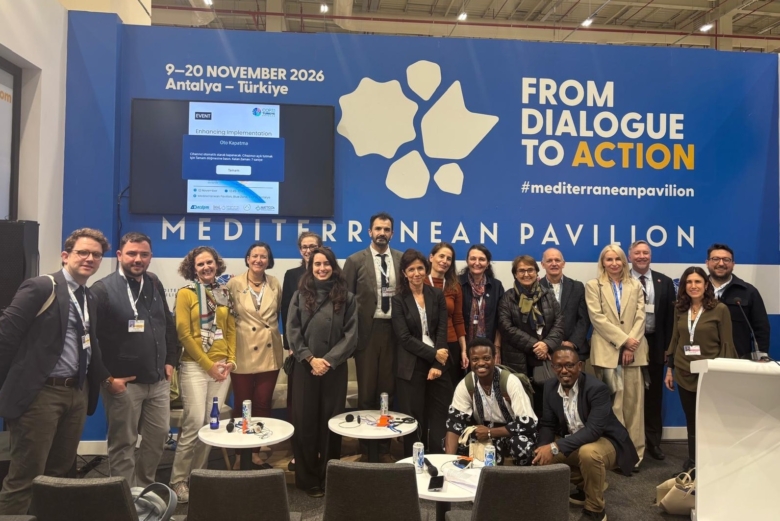
Photo credit: European Heritage Hub
The Culture at COP platform provided a vibrant home and effective vehicle for many culture and heritage actors to coalesce, through its mobile communications channels, social media presence and in-person gatherings in the Blue Zone, Green Zone and City Zone (Antalya city venues), not least the well-attended and widely appreciated side event at AKMED on November 19. The platform also provided brand recognition for COP stakeholders at large to become aware of “culture” as a theme and sector that has an undeniable role in UNFCCC processes.
The relationships built, knowledge exchanged and practical initiatives showcased in Antalya provide a strong foundation for continued action. Heritage Adapts!, Culture at COP, the Climate Heritage Network, and the broader network of cultural organisations that attended the summit demonstrate a growing movement recognising that cultural heritage has an important place in shaping climate solutions.