Culture for co-creative Partnerships

© Radoszek Arts / Europa Nostra
The Work Package 5 of the network project Europa Nostra Heritage Agora (2025-2028), entitled Culture for co-creative Partnerships, intends to build on Europa Nostra’s leading role in mobilising the heritage sector and civil society in Europe. It builds on the policy opportunities offered by Work Package 2 – Artists and Cultural Professionals and makes links with Work Package 3 – Culture for the People and Work Package 4 – Culture for the Planet. It engages Europa Nostra’s network to pass on its knowledge and to lead to new, innovative and creative partnerships with heritage and non-heritage stakeholders alike.
European Heritage Masterclasses
The yearly European Heritage Masterclasses have gained reputation as an effective and active training programme. These hybrid masterclasses focus on the role of heritage as a vector to foster international cultural relations, democracy, peace and intercultural dialogue. Special attention will be paid to both candidate countries for membership of the European Union and to neighbouring countries of the EU. These small-scale workshops are organised in conjunction with other activities of the project and in cooperation with relevant public and/or private partners. The selection of participants ensures gender, intergenerational and geographical balance and representativeness within the groups.
The European Heritage Masterclass with Prof. Dr. Hermann Parzinger is a new 12-part video series. Across 12 concise lessons, the Masterclass explores cultural heritage as a living force in society. It moves from fundamental questions of identity, ethics and ownership to urgent challenges such as war, climate change, digital transformation, social media, governance, European cooperation and the future of heritage. Prof. Dr. Hermann Parzinger is renowned archaeologist, historian, cultural heritage expert and Executive President of Europa Nostra.
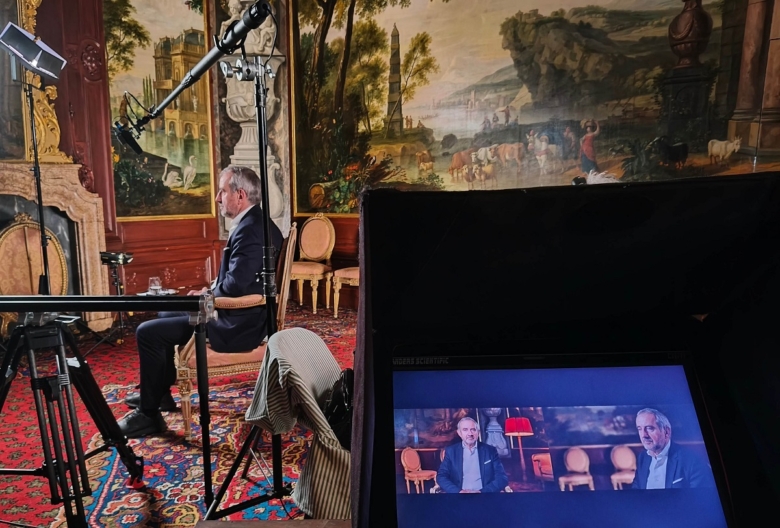
The Masterclass was recorded at Huis van Brienen in Amsterdam, The Netherlands. © Europa Nostra
Watch the 12 Masterclass lessons
Partnerships for Heritage
Europa Nostra has established transformative partnerships with other European or international organisations to promote the mainstreaming of heritage policies and encourage the safeguarding of tangible and intangible heritage in Europe and beyond.
With the aim of addressing the need for a heritage- and culture-led transformation of our society, our economy and our environment, Europa Nostra will continue to work with its partners (including the European Heritage Alliance and its individual members) on new innovative activities, and enter into new creative partnerships with civil society organisations. Attention will also be paid to intangible heritage, notably the music sector.
In 2025-2026, Europa Nostra and the European Union Prize for Literature teamed up to bring to life a series of short documentary videos titled “Bound by Heritage’’ – A literary dialogue with Europe’s endangered heritage. The series of four episodes, filmed in four European countries, explores how contemporary literature can help shed light on the importance of preserving cultural heritage. “Bound by Heritage’’ brings together authors either shortlisted or awarded by the European Union Prize for Literature and heritage sites from our 7 Most Endangered Programme: Mihaela Šumić and the Partisan Memorial Cemetery in Mostar, Bosnia and Herzegovina; Nicoletta Verna and the Synagogue of Siena, Italy; Vladimir Vujović and the Cultural Landscape of Sveti Stefan in Paštrovići, Montenegro; and Deniz Utlu and the Sisters’ House Ensemble in Kleinwelka, Germany.

Watch the Bond by Heritage videos
In March 2026, Europa Nostra and ALIPH – the International alliance for the protection of heritage, hosted in Brussels a panel discussion, entitled “Women Safeguarding Cultural Heritage in Contexts of Conflict and Crisis”, and inaugurated the outdoor exhibition, “Portraits of Women – Beyond the Stones”, honouring eight women whose mission is to safeguard cultural heritage. The panel discussion was hosted in the symbolic setting of the Zweig Visitor Centre of the European Parliament. In May 2026, the joint Europa Nostra/ALIPH exhibition about women at the forefront of protecting heritage was on display in Nicosia, at the Park under Eleftherias Square. Three of the eight women featured in the exhibition were present during the inauguration on 29 May, namely Ceren Kurum (Cyprus), Natalie Neophytou (Cyprus) and Inge Bisgaard (Greenland/Denmark).

For the Inclusive European Heritage Residency 2025 at the historic Hardwick Hall estate in central England, UK, Europa Nostra teamed up with the National Trust for England, Wales and Northern Ireland, and INTO – the International National Trusts Organisation. The programme was structured around the National Trust’s strategy, “People and Nature Thriving”, encouraging participants to reflect on how heritage can contribute to restoring nature, reducing inequalities, and engaging diverse communities.
The Inclusive European Heritage Residency 2026 was organised by Europa Nostra, Din l-Art Helwa – the National Trust for Malta and INTO. From 13 to 19 September, Malta’s rich cultural heritage took centre stage during the second Residency, bringing together 10 selected participants from across Europe for peer learning activities and exchanges with dozens of volunteers and professionals.

Campaigns for Heritage
Since its founding, Europa Nostra has deployed and supported campaigns to safeguard endangered heritage throughout Europe. Our shared cultural heritage is under growing threat: from disasters caused by natural and human-induced hazards to the impacts of climate-change, conflict, neglect, poorly planned development, violation of the rule of law and lack of funding. The activities of this Work Package focus on relevant endangered heritage sites – both in and outside Europe – that are not already covered by the 7 Most Endangered Programme.
2026
- In a statement issued on 11 March 2026, Europa Nostra expressed grave concern over destruction of cultural heritage in the wider region of Middle East. Beyond the tragic human suffering, historic sites, museums, cultural institutions and heritage professionals across the region face growing threats of destruction. Recent reports indicate damage to important historic sites in Tehran, including the World Heritage-listed Golestan Palace, as well as damage to World Heritage sites in Isfahan. Missiles have also hit architecturally significant modernist buildings in Tel Aviv’s “White City” and the World Heritage site of Tyre in Lebanon.

Photo collage (from left to right): 1. Golestan Palace, Tehran, Iran (Farnaz Kohankhaki/Unsplash) 2. Golestan Palace, Tehran, Iran (Diego Delso via Wikimedia Commons) 3. White City, Tel Aviv, Israel (ColorMaker/Shutterstock) 4. Tyre, Lebanon (Tim Broadbent/Unsplash) 5. Chehel Sotoun Palace, Isfahan, Iran (Zenith210 via Wikimedia Commons) 6. Painting in Chehel Sotoun Palace, Isfahan, Iran (Wikimedia Commons)
- In a statement issued on the eve of 4 July 2026, which marked the 250th Anniversary of the Independence of the United States of America, Europa Nostra expressed support to those in the U.S. who are working tirelessly to defend the integrity of cultural heritage practice. As the United States government has withdrawn from key international cultural institutions, such as UNESCO and ICCROM, heritage professionals have been fired and community voices silenced, we reiterated that our American colleagues deserve protection, respect and freedom to uphold professional ethics.
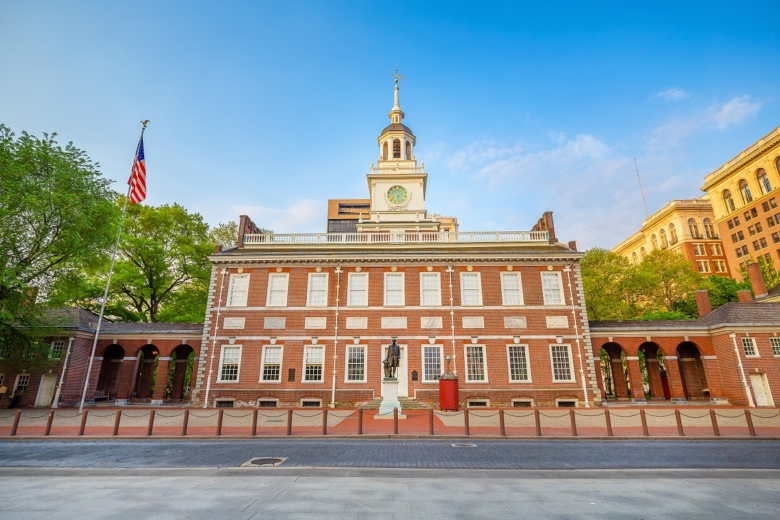
The Independence Hall in Philadelphia is a UNESCO World Heritage Site. The Declaration of Independence (1776) and the Constitution of the United States (1787) were both signed in this building. Photo credit: Shutterstock
2025
- In response to the destruction of Ukraine’s cultural heritage, Europa Nostra strongly supported the creation of the Ukrainian Cultural Heritage Fund, in a statement published on 19 June 2025, on the eve of an expert meeting in Florence. Over 1,400 heritage sites have already been devastated by Russia’s ongoing war in Ukraine. The Ukrainian Cultural Heritage Fund is a crucial step in protecting, restoring, and rehabilitating Ukraine’s cultural legacy, which forms part of Europe’s shared heritage, and should become a key instrument of the country’s lasting recovery and resilience.
1,400+ heritage sites in Ukraine damaged, including the #UNESCO-listed Saint Sophia Cathedral in Kyiv
Ahead of an expert meeting in Florence, we applaud the creation of the #UkraineHeritageFund & stand ready to support its implementation https://t.co/OPADfjpO2w pic.twitter.com/zOblFAZKR1— Europa Nostra (@europanostra) June 19, 2025
- On 31 October 2025, Europa Nostra issued a statement expressing unwavering solidarity with the civil society and cultural heritage actors in Georgia, where recent laws and anti-EU rhetoric threaten to isolate this EU candidate country thus endangering its rich cultural heritage and vibrant civic life.
We have released a statement of unwavering solidarity with Georgia’s civil society & cultural heritage actors.
Recent laws & anti-EU rhetoric threaten to isolate the EU candidate country and endanger its rich heritage.
Read the full statement https://t.co/QwcUYumxqT
— Europa Nostra (@europanostra) October 31, 2025
- On 31 October 2025, Europa Nostra published a statement of solidarity with civil society and cultural heritage professionals and activists who defend European values in Serbia, an EU candidate country. Protected heritage sites like the Generalštab Modernist Building face the risk of demolition to be replaced by a massive unsuitable real estate development project, while the Belgrade Fair faces the risk of radical transformation driven by private investment. Meanwhile, cultural voices are actively being silenced.
We have published a statement of solidarity with those in Serbia defending heritage, democracy & freedom amid mounting repression.
️Sites like the Generalštab Building, Belgrade Fortress & Belgrade Fair are at risk. We call on the EU & Europeans to act⬇️https://t.co/j40Y5bz7sS
— Europa Nostra (@europanostra) October 31, 2025
The expected outcome of this Work Package is the emergence of a more transdisciplinary, transnational and cooperative stakeholder engagement strategy across Europe and beyond. Through new and reinforced partnerships, capacity building models, and cross border campaigns to safeguard endangered heritage, the Agora project will also contribute to increased democratic engagement in the heritage and culture sectors, and a more robust participation by stakeholders both inside and outside the EU.