Europa Nostra discusses cultural personalities that could be featured on future euro banknotes with European Central Bank staff
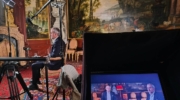
On 15 July 2026, Europa Nostra gave an online presentation to the staff of the European Central Bank (ECB) on the six chosen iconic cultural personalities that could potentially be featured on the next euro banknotes. The ECB is currently in the process of redesigning euro banknotes and invited Europa Nostra as an expert organisation in the field of cultural heritage to participate by sharing the significance of the chosen six figures — from the values they embody to how they represent Europeans, by connecting and uniting citizens through their lives and work.

All rights reserved
On behalf of the organisation, Executive President Hermann Parzinger and Secretary General Sneška Quaedvlieg-Mihailović presented Europa Nostra’s mission and core projects before providing biographical information and explaining the relevance and importance of the following six European personalities: opera legend Maria Callas (€5 banknote), immortal composer Ludwig van Beethoven (€10 banknote), pioneering scientist Marie Curie Skłodowska (€20 banknote), author Miguel de Cervantes Saavedra (€50 banknote), Renaissance polymath Leonardo da Vinci (€100 banknote) and peace activist Bertha von Suttner (€200 banknote).
During the presentation, Europa Nostra’s Executive President and Secretary General highlighted Europe’s cultural “founding mothers and fathers”. They shared that Maria Callas symbolises artistic excellence and cultural exchange, while Beethoven’s music — most notably Ode to Joy, taken from his Ninth Symphony, which forms the basis of the European anthem — reflects freedom, resilience and unity. Marie Curie Skłodowska was presented as an enduring symbol of scientific innovation and perseverance, having broken barriers as the first woman to win a Nobel Prize and the only person to receive Nobel Prizes in two scientific disciplines.
Miguel de Cervantes Saavedra, author of Don Quixote, was recognised for shaping modern literature and championing humanism through imagination and compassion. Leonardo da Vinci was highlighted as a figure representing the fusion of art and science, celebrating curiosity, lifelong learning and interdisciplinary thinking. Bertha von Suttner, the first woman to receive the Nobel Peace Prize, was acknowledged for her pioneering role in the international peace movement and her advocacy for European cooperation.
The reverse side of each proposed banknote would depict public spaces linked to each figure’s legacy, including theatres, schools, libraries, museums and public squares, emphasising the importance of shared cultural spaces in everyday European life.
Europa Nostra argued that the designs would reinforce the European Union’s motto, “In Varietate Concordia” (“United in Diversity”), by celebrating cultural achievements that have shaped the continent across generations. Citing a 2025 Eurobarometer survey, Sneška Quaedvlieg-Mihailović told the audience that 87% of Europeans believe culture and cultural exchange should occupy a very important place in the EU, underlining that European citizens already understand the value of culture and our shared cultural heritage.
In his concluding remarks, Hermann Parzinger underlined that future euro banknotes should represent more than economic value. Instead, they should remind citizens that Europe’s greatest strength lies not in political or military power, but in its enduring contributions to culture, knowledge, creativity and peace.
Among the two final banknote themes up for decision are “European culture”, focusing on prominent European culture figures on the front of the banknotes and shared cultural spaces on the back, and “Rivers and birds”, displaying European nature motifs on the front of the banknotes, and European institutions on the reverse.
In July 2025, the ECB launched a public contest for the design of future euro banknotes — the next step in the euro banknote redesign process, and the Governing Council is expected to decide on the final design by the end of 2026. It is expected that this summer the ECB will launch a survey to gather views on the shortlisted designs, and will invite the public to provide feedback.