European Parliament workshop explores the future of music, innovation and European identity
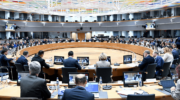
On 4 November 2025 in Brussels, the European Parliament’s Panel for the Future of Science and Technology (STOA) hosted a dynamic workshop titled “Empowered by Music in the Age of Innovation”, bringing together musicians, AI experts, civil society and policymakers to explore how music and emerging technologies can shape Europe’s cultural and creative future.

Photographer: Alexis HAULOT; Copyright: © European Union 2025 – Source : EP
Opening the session, MEP Hélder Sousa Silva, himself a saxophonist and former Mayor of Mafra, Portugal, emphasised that collaboration across institutions and communities would determine whether Europe becomes a “leader or follower” in the global innovation landscape. Drawing on his background in local cultural initiatives with Europa Nostra, Silva called for unity between science, culture, and technology to ensure that creativity remains central to Europe’s future.
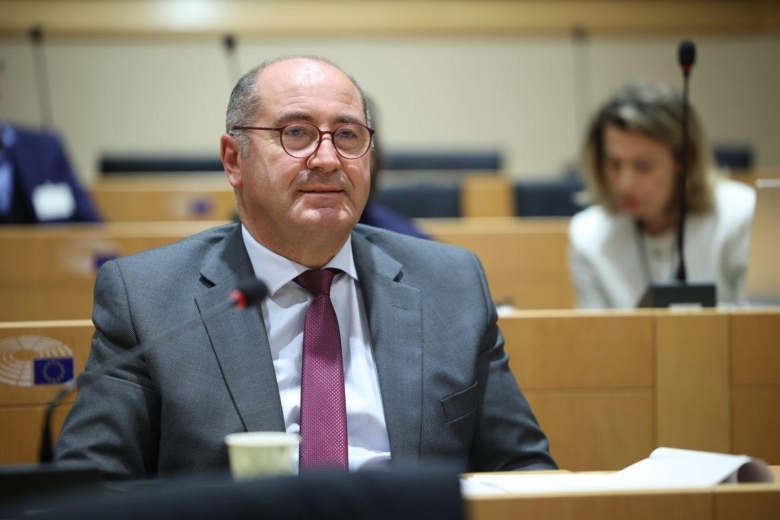
Photographer: Alexis HAULOT; Copyright: © European Union 2025 – Source : EP
Music and AI: Can Machines Truly Create?
In his keynote address, François Pachet, founder of Imagine All The People and former director of Spotify’s Research Lab, confronted one of the workshop’s central questions: “Music and AI: Is the problem solved?” Pachet argued that while artificial intelligence has transformed music production, its creative understanding remains superficial.
“AI is very good at producing music, but there is no backbone,” he explained. Referring to the universal approximation theorem, Pachet noted that while AI can learn to mimic any style given enough data, it cannot yet grasp musical fundamentals such as rhythm and emotion. He cited the evolution of James Bond soundtracks as an example of declining compositional depth, contrasting Adele’s Skyfall (2012), which features only four chords, with Paul McCartney’s Live and Let Die (1973), which is “three songs in one”.
“Style imitation is not creativity. AI is pushing human creators to be more creative — but true innovation still demands human intention,” he concluded.
Eurovision and Emerging Music Technologies
The first panel, moderated by Dean Vuletic, historian and author of Postwar Europe and the Eurovision Song Contest, explored how technology continues to empower artists and audiences. Vuletic reminded attendees that “Eurovision began as a technological project” — a 1956 experiment to test live television across Europe. Since then, Eurovision has driven media innovation, from color broadcasting to satellite communication, while strengthening European cultural identity, Vuletic said.
The discussion then turned to the future of musical experiences in the digital era. Luca Turchet, coordinator of the EU-funded MUSMET project at the University of Trento, presented his vision for a “Musical Metaverse made in Europe.” The four-year initiative (2025–2029) aims to build technologies that allow musicians and audiences to interact seamlessly in virtual and mixed-reality spaces. “Music is a social activity, but today’s metaverse is not social enough,” Turchet said. MUSMET has already achieved breakthroughs in zero-latency immersive audio, paving the way for new kinds of shared performances.
The Transformative Power of Music
The second panel, also moderated by Vuletic, explored music’s role in promoting peace, empathy, and cultural unity. Jorge Chaminé, UN Ambassador for Peace and Justice and Director of the Centre Européen de Musique, poetically described music as “the art of listening – the place where attention becomes creation.” He warned that while AI can compose symphonies, “it cannot care.” The true challenge, he argued, is not whether machines can make music, but “whether they can listen.”

Photographer: Alexis HAULOT; Copyright: © European Union 2025 – Source : EP
Sneška Quaedvlieg-Mihailović, Secretary General of Europa Nostra stressed the need to treat music as a pillar of Europe’s intangible heritage. She called for greater investment in cultural initiatives that embody the EU’s founding motto, “unity in diversity”.
“We should invest more in what matters — and that includes music, heritage and culture”, she said.
Representing the European Commission, Georg Häusler, Director for Culture, Creativity, and Sport (DG EAC), underscored the importance of financial and political commitment: “We need to put money where our mouth is.” He previewed the upcoming Cultural Compass for Europe, an initiative to guide EU cultural policy, and advocated raising culture higher on the European agenda.
Closing the session, STOA Chair Christian Ehler reminded participants that music has always reflected Europe’s social evolution — from classical compositions to rap as a form of youth dialogue. “Music is an instrument for how our societies are developing”, he said. “The question now is: what is the heart of Europe?”

Photographer: Alexis HAULOT; Copyright: © European Union 2025 – Source : EP
As technology transforms how music is made, shared, and experienced, the workshop made one message clear — Europe’s creative future will depend not only on innovation, but on its ability to listen.
More photos
Photographer: Alexis HAULOT; Copyright: © European Union 2025 – Source : EP