Cross-border community in action: How the Historic Centre of Stolberg (Germany) came back to life
After a mass flood in mid-July 2021 devastated the Historic Centre of Stolberg in the western part of Germany, causing severe damage to hundreds of buildings, the centre of the 500-year-old town was listed among the 7 Most Endangered heritage sites in Europe for 2022. Since its involvement in the 7 Most Endangered Programme run by Europa Nostra, the Historic Centre of Stolberg has not only been successfully rebuilt, but strengthened its network and community in the process — a completely unexpected, and very welcome outcome of the selection. Europa Nostra sat down with Dr. Karl Schmeer, Chemist and Biologist, who was involved in the nomination of the site for the 7 Most Endangered Programme, to hear about the Historic Centre of Stolberg’s inspiring journey.

What was the situation of the site when it was nominated for the 7 Most Endangered Programme, and what was at stake?
It was a bad situation, the Historic Centre of Stolberg was badly flooded. It happened at an unexpected time. It was mid-July, and it had been raining for six weeks, when suddenly two meters of water flooded the main streets. It was dangerous and rough. This was a wakeup call, everyone’s talking about climate change and the effects and now we saw it. Two days later, the city centre was devastated.

You’re standing in front of the mess and asking yourself, what can I do? So, the natural next step was to make an application to Europa Nostra’s 7 Most Endangered Programme. No one knew what would come and happen. Help from the government and state was announced but we felt insecurity nonetheless.
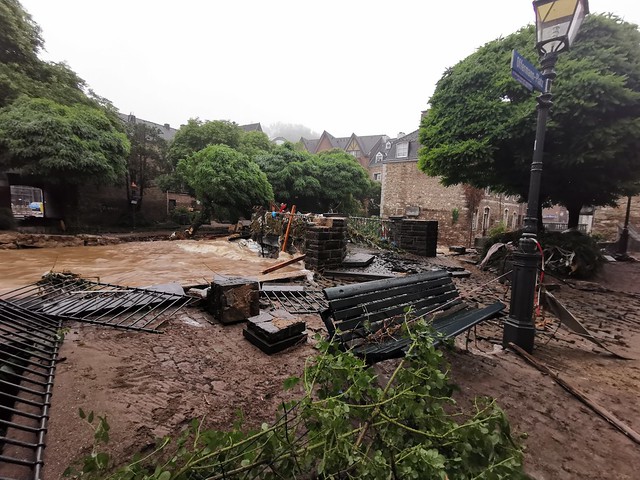
We succeeded in collecting a lot of support letters for the nomination. We asked various businesspeople, churches, trade unions, institutions, and ordinary citizens for letters of support. It was a beautiful thing. It wasn’t always easy — so many people had lost their homes, their existence. The community came through and every day people submitted letters of support. We were then actually selected by Europa Nostra, and everything that followed was the result of that single nomination.
There are more than 700 buildings in the Historic Centre, and they should all be protected. We have 500 years of history preserved in stone, from the 16th century through the Wilhelmine era, Art Deco, and beyond. It’s all there. And all of this was at stake.
What difference did the 7 Most Endangered Programme make, and was there a particular moment that marked a turning point in this conservation effort?
Once the Historic Centre of Stolberg was included on the list of 7 Most Endangered heritage sites in Europe for 2022, we thought, what could we do with this important recognition? Despite being located so close to the Belgian and Dutch borders, we had no partnerships there. So that became our starting point: looking towards our neighbours and asking what connects us? It turned out we share a history, both European and linked to zinc ore. This led to the creation of a lecture series, a book that sold some 300 copies (with an upcoming second edition), published thanks to the seed funding provided by the 7 Most Endangered Programme; and an Erasmus+ project with Belgian partners.
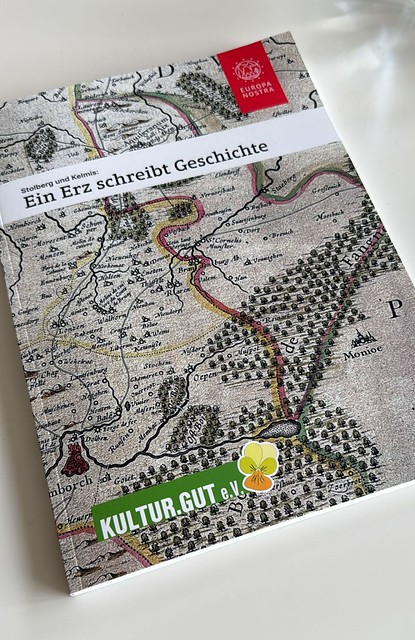
This opened a second front: European cooperation at local level, with events such as the European Heritage Days and, under the patronage of Europa Nostra, advancing European integration while building partnerships with Belgium and the Netherlands.
Another key development was bringing in external expertise on architectural conservation, pushing for an advisory board for Stolberg town centre, chaired by Professor Christa Reicher, RWTH, holder of the UNESCO Chair for Cultural Heritage and Urban Development.

The selection for the 7 Most Endangered also shifted local perspectives: many residents hadn’t realised what a historic jewel the Historic Centre of Stolberg is, and it made citizens feel that “Europe looks at us”, deepening our connection to this place — an important lesson. The outcome was unexpected, with no initial plan. It led three communities to cooperate, presenting the region as a shared cultural landscape.
Without a united Europe, our individual states risk becoming little more than footnotes in history. But a stronger Europe cannot be built by institutions in Brussels alone. It must also be shaped and driven by its citizens. That is what we are committed to: bringing people together, strengthening a shared European identity, and helping build a Europe that belongs to all of us.
Who are the people behind this project, and what role have they played in protecting the site?
The project was driven mainly by two associations — City Marketing and Kulturgut — which are closely interconnected. The project was entirely civil society-based. Together, they brought the whole initiative forward and will, we hope, continue to carry it forward. The core group behind the project is composed of about a dozen people, but the associations are very influential, so we have made good connections through their network.

The best way to describe how the protection of the Historic Centre of Stolberg came about is by looking at the local community. I was living in the old town when the disaster struck, and neighbours would simply talk to each other about this terrible situation. That is what set everything in motion. So we took this to a larger scale and these associations came to our immediate support. Even for us, this sense of community was a surprise. We hope that in the future we’ll have a small European community here, in our corner too.
What does the future look like for the site today, and what gives you hope?
Our activities have grown above the city centre, strengthening the European connection. The deeper you dive into history, the clearer you see that borders are artificial.
Making Stolberg known is our desire. The city hasn’t sold itself to its full potential. This is in part due to the decline of the metalworking industry. When the metal industry collapsed, people lost their jobs and the income these enterprises one brought broke away. There is a real desire to improve the reputation and visibility of the city, though there is still much to do. External advice is needed.
After being selected for the 7 Most Endangered Programme, our goal is to gain the European Heritage Label at the end of next year alongside our Belgian colleagues
The Europa Nostra team would like to extend our sincerest gratitude to Karl Schmeer for his participation in this interview. Stories like that of the Historic Centre of Stolberg shine light not only on the importance of preserving heritage at risk, but also the power of advocacy and cross-border community action in shaping a shared European future.
This Impact Stories interview was edited for length and clarity.
About Impact Stories series
Since 2013, the 7 Most Endangered Programme – run by Europa Nostra with the support of the European Investment Bank Institute and the Creative Europe Programme of the European Union – has been committed to the protection of European heritage at risk. In this time, 77 threatened monuments and heritage sites from across 35 countries have been selected, each with its own unique history, community and story to tell. From ancient ruins to industrial landmarks, the sites reflect Europe’s diverse cultural landscape and the equally diverse challenges they face.
As part of our ongoing mission, we want to create a space dedicated to celebrating the people and organisations behind these sites, showing the long-term impacts of each small step taken in or beyond this Programme.
The 7 Most Endangered Impact Stories series is built around stories from selected sites across the Programme, drawing on interviews with the nominators and people directly involved in the Programme.
The first stories are being published in conjunction with the 2026 theme of European Heritage Days “Heritage at Risk: Revive, Resist, Reimagine” to join efforts in showcasing the many possible pathways towards safeguarding and giving new life to our heritage.