Europa Nostra celebrates citizens’ engagement and emphasises placing cultural heritage at the heart of European policy at the Delphi Economic Forum 2026
From 22 to 25 April, Europa Nostra participated in the Delphi Economic Forum 2026, Greece, reaffirming the central role of cultural heritage in Europe’s democratic, social and environmental future. The Forum brought together cultural leaders, policymakers and civil society actors at a moment when Europe is facing profound global and internal challenges to democracy, identity and solidarity.

Europa Nostra’s Secretary General, Sneška Quaedvlieg-Mihailović, was present throughout the Forum. She acted as Master of Ceremonies of the Costa Carras European Citizens Awards for the Safeguard of Endangered Heritage Ceremony 2026, participated in the panel discussion “Europe: Threat of Civilisational Erasure or Promise of Cultural Renaissance?” and held strategic exchanges, including with António Costa, President of the European Council, on the importance of cultural heritage for Europe’s long-term resilience and unity.
A ceremony rooted in citizens’ action
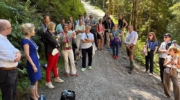
In the symbolic heart of ancient Europe, the 2026 edition of the Costa Carras European Citizens Awards for the Safeguard of Endangered Heritage Ceremony unfolded on 22 April for the fourth year as a celebration of civic courage and action.

Opening the awards ceremony, Sneška Quaedvlieg-Mihailović, Secretary General of Europa Nostra, underscored the enduring relevance of cultural heritage in times of global uncertainty. Speaking against a backdrop of rising geopolitical tensions, she emphasised that heritage is “not a sector, but a vector” — a force capable of advancing peace, democracy, and solidarity across Europe.

Lydia Carras, President of ELLINIKI ETAIRIA – Society for the Environment and Cultural Heritage, drew attention to the remarkable growth of the awards, which this year attracted 41 applications from across Europe and beyond. The presence of prominent cultural figures, including historian and broadcaster Bettany Hughes, and Alexandra Mitsotaki, President of the NGO World Human Forum, reinforced the ceremony’s wider significance as a gathering of cultural leaders.

In his remarks, Kostantinos Salakos, Head of Content at the Delphi Economic Forum, highlighted Costa Carras’ participation in the Forum from its inception. In a video message, Anastasios Paul Leventis, Chairman of the A. G. Leventis Foundation, underlined that “heritage endures not only through preservation, but also through participation.”

Representing the European Investment Bank (EIB), Mariana Nathanael, Head of the EIB Group Office in Greece, emphasised cultural heritage as a vector for “sustainable tourism, skills development, and social inclusion” and the EIB Institute’s longstanding support for Europa Nostra’s 7 Most Endangered Programme.
At the heart of the event stood the legacy of Costa Carras, whose lifelong commitment to protecting both natural and cultural heritage continues to inspire grassroots action across the continent. As highlighted throughout the ceremony, his vision placed citizens at the centre of heritage preservation — a principle vividly reflected in this year’s awardees.

The Gold Award was presented to the Citizens Association of Podbara “Almašani” from Serbia, recognised for its tireless work to safeguard the historic Almaš district of Novi Sad. Accepting the award, Dr. Marijan Mijan spoke of a “20-year-long journey through cultural heritage,” while Violeta Jerković highlighted the power of cooperation, dialogue, and shared values in sustaining both heritage and democracy.

The Silver Award honoured the Volunteer Cultural Association “Agapame Desylla” from Greece, a grassroots initiative revitalising a small rural community through cultural and environmental action. In an emotional address, founder Marios Gkrogkos reminded the audience that “when you love a place, you can make it flourish,” linking local engagement to global impact.
Together, the two award-winning initiatives illustrated a central message of the ceremony: that Europe’s heritage is safeguarded not only by institutions, but by committed citizens — in cities and villages alike.
“We live in a world devastated by wars, conflict — some very close ones — and democracies are once more in danger in many parts of our planet. The citizens who won these Awards today should give us hope. That we should not despair. That good can prevail,” said Lydia Carras.
From the urban neighbourhoods of Novi Sad to a small village in the Peloponnese, the 2026 Costa Carras European Citizens Awards demonstrated at a time when democratic values face renewed pressure, citizens have the power to offer not only protection of the past, but a vision for the future — one rooted in shared European values, active participation, and respect for cultural heritage
Cultural heritage at the core of Europe’s future
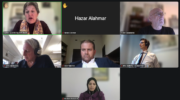
On 23 April, a panel discussion titled “Europe: Threat of Civilisational Erasure or Promise of Cultural Renaissance?”, moderated by journalist Simon Nixon, brought together a high-level panel, including Sneška Quaedvlieg-Mihailović, Secretary General of Europa Nostra; Herman Van Rompuy, Chairman, Advisory Council, Empress Theophano Foundation; Lars Ebert, Secretary General of Culture Action Europe; and Wolfgang Bergmann, CEO, ARTE-Germany.

Participants converged on a shared conclusion: culture is not merely complementary to policy — it is foundational. As Herman Van Rompuy noted, the pursuit of “beauty, truth and goodness” lies at the heart of European civilisation, while Lars Ebert argued that culture provides the “power of imagination” necessary to sustain democratic societies. Wolfgang Bergmann underlined that Europe’s cultural diversity is ultimately a key strength: “ARTE was a political idea. The idea to put together a German and a French TV team to create a joint venture, first in Germany and France, but then also for Europe, was a completely crazy idea. And because it was so crazy, it worked out very well,” he said.

In her intervention, Sneška Quaedvlieg-Mihailović reaffirmed Europa Nostra’s dual role as both a cultural and civic movement, stressing that Europe’s unity is rooted in its shared cultural foundation. “Europe is not just the institutions,” she said. “It’s us. And we have a role as protagonists to move this project forward.”
Beyond reflection, the discussions also pointed toward concrete political ambition. Sneška Quaedvlieg-Mihailović revealed that she had an exchange with European Council President António Costa on the margins of the Forum, proposing that a future European Council summit be dedicated entirely to culture.
Describing it as an opportunity to “make history”, she urged European leaders to recognise culture and cultural heritage as part of the European Union’s core policies. Costa’s positive response, “It’s a good idea. Let’s continue the conversation”, signaled a potential opening for elevating culture within the European agenda.