Interview with Inge Bisgaard, Heritage Champion from Greenland/Denmark
As the world has turned its eye to Greenland this month, Europa Nostra caught up with Inge Bisgaard, a lifelong Greenlander who has devoted her career to evaluating, safeguarding and communicating about Greenland’s built environment. She has combined national insight with international expertise to become one of Greenland and Denmark’s foremost building conservation specialists. Since 2011, Bisgaard has served as museum curator at the Greenland National Museum and Archives in Nuuk. In 2025, Bisgaard was the Grand Prix winner in the category Heritage Champions of the European Heritage Awards / Europa Nostra Awards, the highest heritage accolade in Europe.

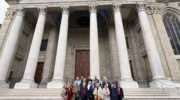
Europa Nostra: Last October, you travelled to Brussels with a large delegation of your colleagues from Greenland to attend the European Cultural Heritage Summit and the European Heritage Awards Ceremony. Please share with us some impressions from this experience.
Inge Bisgaard: The trip to Brussels has been an unforgettable experience for all of us. I am so glad that I had my family, friends and colleagues with me, because it means so much to share something so big with family and relatives. Meeting all the participants at the European Cultural Heritage Summit was a fantastic experience and especially to meet so many colleagues with the same interests and celebrating our beautiful shared cultural heritage.

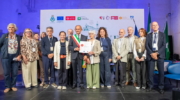
Europa Nostra: On this occasion together with the European Commissioner for Culture, Glenn Micallef, we announced that you received our Grand Prix in the category Heritage Champions. What does this “European Oscar for Cultural Heritage” mean for you, your work and your community?
Bisgaard: To receive such a prestigious award and presented by the European Commissioner for Culture, Glenn Micallef, filled me with deep gratefulness. It was undoubtedly not to refrain from giving a warm thought to my parents who passed away many years ago – they would certainly shed a few tears of joy. The Grand Prix has attracted great attention to Greenlandic cultural heritage and Greenland. It’s my hope that the increased attention to Greenlandic building culture will open up new opportunities to ensure that cultural heritage connects the past with the future for many, many generations. Building culture has from early times to the present day formed the framework for a lived life and will continue to be the best narrator for the values that have surrounded us.

Europa Nostra: How did growing up in Greenland influence your passion and action for cultural heritage?
Bisgaard: I grew up in a time when the old Greenland and the new Greenland walked side by side. Owning a house had a huge value and each individual building part was precious and was carefully maintained and looked after. My passion for cultural heritage is connected to my upbringing and the Danish/Greenlandic values I was rounded off by. The Greenlandic part has taught me that everything has a soul and beauty is strengthened by getting to know its nature. The Danish part has taught me that knowledge opens up worlds.
Europa Nostra: How did the natural environment and landscape influence the cultural heritage (both tangible and intangible) in Greenland?
Bisgaard: Greenland’s architectural heritage was previously adapted to the seasons, the climate and the local building materials. The form of living consisted of one type of dwelling in the summer and another type of dwelling in the winter. The architecture reflected a unique design that was possible to create with the local sparse natural materials from the land and from wildlife. This scarcity of building materials was enriched by the new building materials from Europe in the 18th century and the beginning of a new era in Greenland’s building history. From here, the European building customs were adapted to the Greenlandic conditions and today we can read the “Greenlandic” in the way of furnishing and building on a sparse coastal strip of land. The traditional house entrance was lower than the living room to avoid drafts and today everyone has a vestibule or porch to reduce heat loss in the home.

Europa Nostra: What are the things that make you proud to be a Greenlander?
Bisgaard: Greenlanders have managed to survive in a part of the world where living conditions depend on a strong self-awareness of who we are and have benefited from generations of cultural encounters with other worlds.
Europa Nostra: Tell us something about Greenland’s culture and society that we wouldn’t necessarily see in the news.
Bisgaard: Greenlandic society is closely connected in social relations that connect the country together in every way. In the dawn of time, infant mortality was high and therefore it is an ingrained tradition to celebrate a child’s six-month birthday, to hold a “kaffemik” at almost all important family events such as the first day of school, confirmation, weddings, etc. “Kaffemikken” means open house where delicious traditional Greenlandic dishes are served where reindeer meat, lamb, shrimp, mattak (whale skin), salmon, halibut and many other dishes are put out for everyone to enjoy. The joy is even greater because the families themselves provide the raw materials during the 4 seasons of hunting opportunities on land and water.

Europa Nostra: What role can heritage narratives play in reinforcing the distinct cultural identity of Greenland? And how do you see the cultural connection to Europe?
Bisgaard: I think it is very important to spread and communicate our common cultural heritage. In every part of our beautiful planet, trade and exchange have always been an important factor in the development of society. Belonging to a people and knowing one’s history is an important basic substance and it can only be enriched by other cultures if one has an intact identity. I see a strong cultural connection with Europe and much of it is tied to the early Lutheran mission through the Norwegian priest Hans Egede and the Herrnhut Brethren congregation and not least the encounters with the European whaling trade, where different values were gradually incorporated into Greenlandic society such as colorful glass beads, iron for knives and hunting equipment, fabrics and sewing needles and later a beautiful building culture and strong craft traditions.