General Assembly 2026 in Nicosia endorses Europa Nostra’s Strategy for the next five years
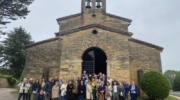
The Europa Nostra General Assembly 2026 took place on the morning of 28 May at the Municipality Town Hall of Nicosia in Cyprus, in the framework of the European Cultural Heritage Summit 2026. The meeting was co-hosted by Europa Nostra’s Executive President, Prof. Dr. Hermann Parzinger, and Secretary General, Sneška Quaedvlieg-Mihailović.

Opening session
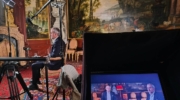
In a heartfelt audio message conveyed at the General Assembly, Europa Nostra’s President Cecilia Bartoli thanked all those who have contributed to the organisation’s mission and action, stating: “I encourage you to continue the fight to protect cultural heritage with passion and enthusiasm. Especially in these times, culture and dialogue are more important than ever.”
The General Assembly marked the Silver Jubilee of Sneška Quaedvlieg-Mihailović who was appointed as Secretary General of Europa Nostra at the Europa Nostra Conference held in Cyprus in 2000.
Representatives of two key European institutions also addressed the General Assembly.

Csaba Borboly, Second Vice-Chair of the SEDEC Commission of the European Committee of the Regions and Rapporteur of the European Committee of the Regions Opinion on the proposed AgoraEU Programme, highlighted the role of local and regional authorities in supporting culture and heritage across Europe.

Luca Jahier, former President of the European Economic and Social Committee (EESC) and Rapporteur of the EESC Opinion on the Culture Compass for Europe, which was unanimously adopted at the plenary session of the EESC on 29 April, underlined the importance of culture and cultural heritage for the future of Europe.
Europa Nostra’s Strategy 2026-2030 and other statutory matters
The main item on the General Assembly’s agenda was the presentation and discussion of Europa Nostra’s Strategy 2026-2030. The Executive President and the Secretary General presented the Strategy’s vision, mission, strategic goals and implementation framework.

Prof. Dr. Hermann Parzinger and Sneška Quaedvlieg-Mihailović highlighted the seven key points of the mission of Europa Nostra, namely:
- ADVOCATE for the recognition of cultural heritage as a vital component of Europe’s cultural pillar due to its strategic importance for our identity, democracy, society, economy and living environment;
- ENSURE the mainstreaming of heritage-related needs and skills across European and international policies, programmes and investments;
- FOSTER synergies and exchanges between its members and partners;
- CELEBRATE excellence & SHARE best principles and practices across borders;
- CHAMPION the culture of solidarity & CAMPAIGN for the rescue of endangered heritage in Europe and beyond;
- MOBILISE & ENGAGE professionals and volunteers across generations, in cities and rural communities, as pro-active custodians of our shared legacy; and
- BUILD BRIDGES with the wider world of culture, education, research and environment protection.

Following a constructive exchange of views, the members unanimously endorsed the proposed Strategy.
Members handled relevant statutory matters, including the approval of the Europa Nostra Annual Report 2025, the approval of the budget for 2027, which was presented by Europa Nostra’s Treasurer, Philippe de Cossé Brissac, and (re-)appointments to the Council.

Sneška Quaedvlieg-Mihailović also provided a brief update on the EU-funded European Heritage Hub, which entered its preparatory action phase following the successful completion of its initial two-year pilot phase.
Concluding session
Agata Wąsowska-Pawlik, Board Member of Europa Nostra and Director of the International Cultural Centre, also on behalf of the Europa Nostra Heritage Hub in Kraków, presented the draft programme of the European Cultural Heritage Summit 2027, which will be held in Kraków ion 6-8 June (dates to be confirmed shortly), under the patronage of the Polish Government and the Municipality of Kraków.