Bi-communal heritage experts call for strategic framework to support reunification and urban resilience in Nicosia
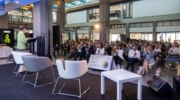
Cultural heritage can play a vital role in fostering peace, cooperation and sustainable urban development in Cyprus, participants concluded during the panel discussion “Shared Heritage, Shared Future”, held on the afternoon of 30 May at the historic Bedesten in the northern part of Nicosia, as part of the European Cultural Heritage Summit 2026 organised by Europa Nostra and the Europa Nostra Heritage Hub in Nicosia. One of the main conclusions of the discussion was that cultural heritage, within the context of Nicosia, should be enveloped in comprehensive urban schemes for it to be protected in the most efficient way.

The event was hosted by Mr Mehmet Harmancı, Leader of the Turkish Cypriot Community of Nicosia and supporter of the Europa Nostra Heritage Hub in Nicosia, in the presence of his Greek Cypriot counterpart, Mr Charalambos Prountzos.

Organised by the Turkish Cypriot Chamber of Architects, the discussion brought together bi-communal heritage professionals, urban planners, local stakeholders and representatives from a wide range of sectors to explore how heritage-led regeneration can contribute to a shared future for Nicosia, particularly within the historic walled city.

Opening the event, Onur Olguner, President of the Turkish Cypriot Chamber of Architects, emphasised the unifying role of the built environment, noting that across professionals from both communities, “we speak the same language – the language of architecture and heritage”.

The panel featured conservation architects and former Nicosia Master Plan team leaders Agni Petridou and Ali Güralp, as well as Emine Reis, a member of the Technical Committee on Cultural Heritage and its Advisory Board, and Natalie Neophytou, Project Manager of the Technical Committee on Cultural Heritage (TCCH). The discussion was moderated by independent urban researcher and Nicosia Heritage Hub Board Member Dr. Özlem Ünsal.
The conversation also reflected on the enduring legacy of the Nicosia Master Plan, which was launched in 1981 under the leadership of Mustafa Akıncı and Lellos Demetriades, then the respective community leaders of Nicosia. Their pioneering vision established a framework for bicommunal cooperation in urban planning and heritage conservation that continues to shape the city today. Mr Akıncı participated in the event, providing a tangible link to this important chapter in Nicosia’s shared history.

In 2002, Mustafa Akıncı and Lellos Demetriades received a Europa Nostra Medal in recognition of “their consistent and successful efforts, as Representatives respectively of the Turkish Cypriot and Greek Cypriot communities in Nicosia, in the cause of their common but divided city and all its citizens during particularly difficult times”.
Speakers emphasised that cultural heritage should be viewed not only as a matter of preservation but also as a tool for dialogue, social cohesion and improved quality of life. They stressed that effective heritage protection and urban regeneration require close cooperation among experts, local authorities, communities, civil society organisations and international partners. One of the benefits of platforms such as the Nicosia Master Plan team and the TCCH is that they present an opportunity for working and learning together, creating knowledge that can be passed down to younger generations of experts.

Participants highlighted the collaborative and bi-communal approach of the Nicosia Master Plan, developed with support from the United Nations Development Programme (UNDP), as a model for future initiatives. The plan’s emphasis on multidisciplinary cooperation, professional capacity-building and improving living conditions was cited as an important example of successful urban planning.
The discussion also addressed ongoing challenges facing Nicosia’s historic urban fabric, including abandoned buildings, structural deterioration, housing rehabilitation needs, infrastructure deficiencies and the temporary relocation of residents during restoration projects. Participants noted that the walled city remains a critical area where cultural heritage, social priorities and urban planning must be addressed in an integrated manner.

Experts underscored the importance of access to local archives, technical documentation and specialist knowledge in designing effective interventions. They also called for greater community involvement from the earliest stages of planning processes through consultation mechanisms and public hearings that ensure local concerns and priorities are reflected in decision-making.
Funding emerged as another key topic, with speakers arguing that financial support should extend beyond individual monuments to include broader urban regeneration, housing rehabilitation, infrastructure improvements and long-term maintenance. The need for impact assessments, feasibility studies and sustainability research was also highlighted.
A central theme of the event was the role of shared cultural heritage in fostering new narratives for a reunited Nicosia. Participants pointed to the city’s Venetian walls, historic buildings and shared public spaces as symbols of common values that can help strengthen social cohesion and mutual understanding. They stressed that cultural heritage should serve as a platform for dialogue and peacebuilding rather than political agendas.

The future role of the Europa Nostra Heritage Hub Nicosia was also presented during the discussion. The hub is expected to bring together cultural heritage advocates, support the development of a structured work programme and promote cooperation based on shared responsibilities and common objectives.
The meeting concluded with a call for a comprehensive assessment process led by the Advocacy Board and involving approximately 30 multidisciplinary experts. Participants said such a process would help identify priorities, allocate responsibilities and develop realistic interventions while ensuring that heritage remains closely connected to residents’ everyday lives and the long-term resilience of the city.
Concluding the event, participants reaffirmed their belief that cultural heritage can serve as a “healing process” for rebuilding trust and helping communities imagine a more peaceful, inclusive and sustainable future for Nicosia.
Programme organised and hosted by the Turkish Cypriot Members of the Europa Nostra Heritage Hub in Nicosia
In addition to the panel discussion “Shared Heritage, Shared Future”, the full-day Programme organised and hosted by the Turkish Cypriot Members of the Europa Nostra Heritage Hub in Nicosia featured the Arabahmet Heritage Tour in the morning of 30 May.

A visit to the historic Arab Ahmet Quarter, just north of Nicosia’s buffer zone, offered a glimpse into one of the city’s most culturally rich and lesser-visited neighbourhoods. Characterised by its well-preserved Ottoman-era houses, quiet streets, art galleries and significant religious landmarks, the quarter reflects centuries of shared heritage between Turkish Cypriot, Armenian and other communities.

Highlights included the Arab Ahmet Mosque, one of Cyprus’s finest examples of Ottoman architecture, and the restored Armenian Church and Monastery, which received the European Heritage Award / Europa Nostra Award in 2015. The award recognised the outstanding conservation of the 14th-century church and monastery, a restoration led by architect Paolo Vitti and supported by international partners including USAID and UNDP. Celebrated by Europa Nostra as a model of heritage preservation and community rebuilding, the project brought together Armenian, Greek Cypriot and Turkish Cypriot communities in a shared effort to safeguard Cyprus’s cultural legacy and strengthen social cohesion.

The Programme’s Closing Event, featuring a folk concert and dance performances led by HasDer ensembles and youth groups, was held in the evening of 30 May at Bedesten, winner of a Europa Nostra Award in 2009.
More information
Photos of 30 May Programme
Presentation on Nicosia Master Plan