Engaging Citizens for Heritage
Europa Nostra works to ensure that citizens and civil society organisations are heard in Europe. To this end, Europa Nostra cooperates closely with other NGOs – both in the heritage and non-heritage fields – to ensure culture and heritage are at the heart of European decision-making.
That is why, ahead of the 2024 European elections, Europa Nostra along with Culture Action Europe and the European Cultural Foundation relaunched the Cultural Deal for Europe campaign. In a joint open letter to MEPs and candidates for election, and through a series of policy dialogues and public debates, we called for culture and cultural heritage to hold a central place in electoral campaigns: in political groups’ programmes and in public conversations with Europeans about the future of our continent.
Following the European elections, Europa Nostra has continued to advocate for the implementation of the Cultural Deal for Europe, actively contributing to the European Commission’s Culture Compass for Europe and to the Joint Declaration “Europe for Culture – Culture for Europe”, calling for culture and cultural heritage to become a strategic priority in the next Multiannual Financial Framework (2028–2034). Europa Nostra also joined the “Name, Place, Fund” campaign, advocating for a stronger place for culture and cultural heritage in the future Horizon Europe and European Competitiveness Fund.
The annual European Cultural Heritage Summits, organised by Europa Nostra with the support of the European Union, are important moments for the organisation to engage with European citizens, as well as its pan-European membership. In recent years, the organisation has debated some of the most important cultural policy issues at the heart of the European project.

The European Heritage Policy Agora 2022 in Prague focused on the need to mobilise forces and voices in solidarity with Ukraine’s endangered cultural heritage, the role of cultural heritage in fostering peace and solidarity within our societies, and the values of beauty and sustainability for an inclusive green transformation. It culminated with the launch of the Prague Manifesto “For a Value and Culture-Driven Europe”.
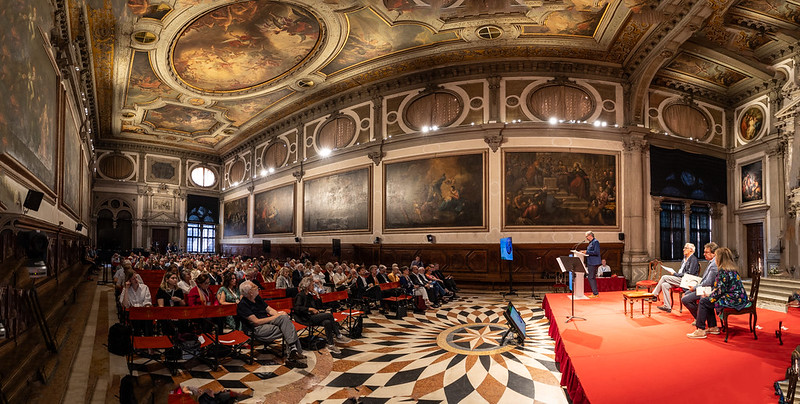
The European Heritage Policy Agora 2023 in Venice explored the value and plausibility of a European Cultural Citizenship. Building on the outcomes of the Summit, the Venice Manifesto “For a European Cultural Citizenship” seeks to promote a wide discussion on a concept of European Cultural Citizenship, with an emphasis on its political rather than legal meaning.

The European Heritage Policy Agora 2024 in Bucharest focused on the concept of quality in cultural heritage, exploring how the European Quality Principles for EU-funded interventions, the Davos Baukultur Quality System and heritage-led approaches can contribute to addressing the climate crisis, improving the quality of the built environment and strengthening the integration of heritage into European policies. As a result the Bucharest Manifesto “For Quality-Driven Cultural Heritage Practice in Europe” was published.

The European Heritage Policy Agora 2025 in Brussels, entitled “The Europeans: Shared Cultural Roots and Values”, highlighted the vital role of culture, history and cultural heritage in shaping European identity and strengthening the European project. Held at the European Parliament, it culminated in the adoption of the Brussels Manifesto “Heritage Matters for Europe – Europe Matters for Heritage”, calling for culture and cultural heritage to be placed at the heart of European policies, budgets and values.

The European Heritage Policy Agora 2026 in Nicosia focused on the contribution of cultural heritage to environmental sustainability, peacebuilding, democratic resilience and cooperation across the Mediterranean and beyond. Building on the outcomes of the Summit, the Nicosia Manifesto “Heritage as the Soul of Mare Nostrum” calls for cultural heritage to become a strategic pillar of European and international policies for sustainable development, climate action, resilience and intercultural dialogue.
Europa Nostra is also proud to contribute to other leading platforms for dialogue and exchange, including the Delphi Economic Forum (Greece), where it has become a regular content partner, hosting high-level discussions on cultural heritage, climate action, European democracy, citizens’ engagement and the future of Europe. In recent editions, Europa Nostra has promoted the role of cultural heritage in the green transition, Europe’s democratic resilience, the enlargement process and the implementation of the Culture Compass for Europe.
The organisation also regularly participates in the ALIPH conferences, the EEAS Europe Day events, the World Monuments Fund Watch selection process, and international dialogues organised by UNESCO, ICCROM, ICOMOS and other strategic partners, strengthening the voice of civil society in global heritage governance.
The organisation currently serves on the Board of the Ukrainian Cultural Heritage Foundation (UCHF), contributing to international efforts to safeguard and restore Ukraine’s cultural heritage and mobilise expertise and resources for its recovery.
We have also maintained close relations with the European Movement International, supporting their policy paper advocating for heritage across Europe. More recently, Europa Nostra has expanded its cooperation with a broad coalition of European cultural, research and civil society organisations to advocate for increased investment in culture and cultural heritage, recognising their contribution to innovation, social cohesion, climate action, citizens’ engagement and Europe’s long-term prosperity.
Europa Nostra is an official partner of many actions at EU level, including the New European Bauhaus, and we are committed to spreading the message of the importance of cultural heritage throughout Europe, with many other NGOs and stakeholders, not just heritage organisations.
The organisation has further strengthened its cooperation with the European Parliament, the European Commission, the European Economic and Social Committee and the Committee of the Regions to ensure that cultural heritage is recognised as a strategic asset for Europe’s competitiveness, security, resilience, sustainability and democratic future.